
Strategy
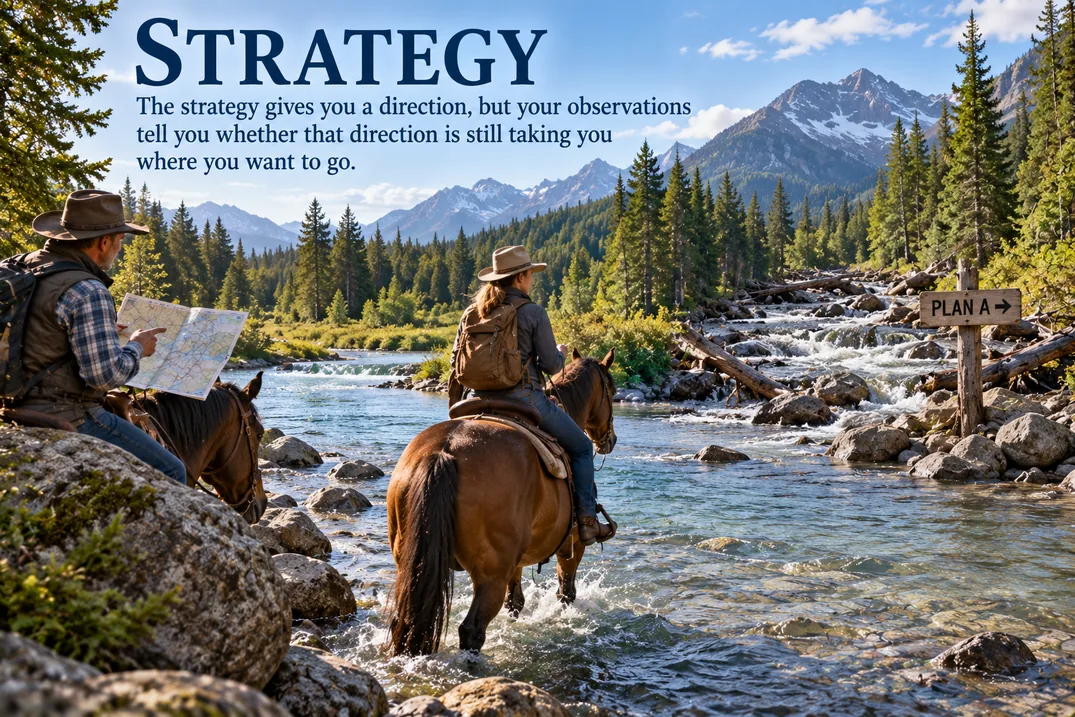
Strategy is a plan based on what you observe, what you know, and what you have experienced.
You may enter a match with a plan to attack an opponent's backhand because it worked the last time you played them. But strategy doesn't mean stubbornly following the same plan. If you discover that their backhand is no longer a weakness, you need to recognize it and change your approach.
Test and Adapt
Sometimes you need to test your strategy before abandoning it. Try the strategic shot in a situation where failure has less consequence, observe the result, and look for a pattern. If you're getting beat three or four times out of four, it's probably time to get off that horse and find a new one—even mid-stream.
The game is constantly giving you new information.
A strategy that worked yesterday may not work today, and a strategy that isn't working now may become useful later as the situation changes.
Strategy Is a Team Effort
In doubles, communication is critical. Partners need to discuss the strategy, determine how it will work, and decide who will take which shots.
A strategy might involve probing, setting up an attack, and deciding which partner is best positioned to make that attack. But both players must remain ready for the return.
Your strategy also has to fit the tools you actually have. If a particular shot is required and only one partner has it in their PAQ toolbox, that needs to be part of the plan.
Play With Purpose
A player can simply enjoy playing pickleball and still have a great time.
A player playing strategically is mentally active and playing with focused determination and purpose. Their shots have intention. They are searching for opportunities, probing to discover weaknesses, and creating situations that allow them to exploit what they find.
Strategy isn't about having a perfect plan before the first serve.
It is about observing, planning, testing, communicating, and adapting as the game unfolds.
The strategy gives you a direction, but your observations tell you whether that direction is still taking you where you want to go.