
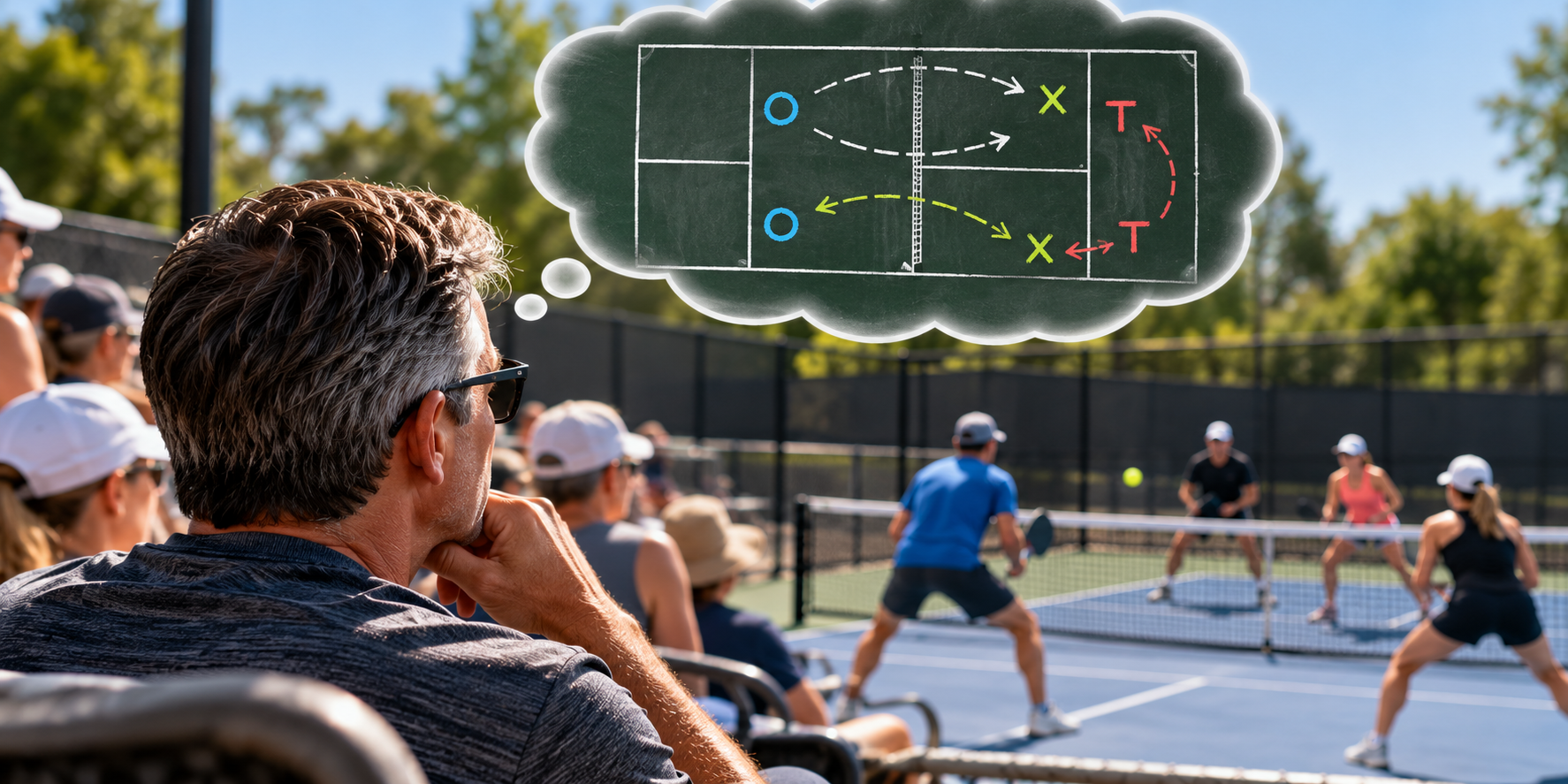
The game of pickleball is continually telling you a story—every point, every rally, every time someone swings their paddle. The information is there. The question is: Do you know what to look for?
Learning how to read the game isn't about predicting exactly what your opponent is going to do. It's about recognizing the information they're giving you and using it to anticipate what might happen next. The sooner you recognize what is happening, the sooner you can move, and the more often you can beat the ball to the bounce.
When you beat the ball to the bounce, you buy yourself time. Time to think, make a decision, and decide whether you want to probe, attack, create a diversion, or continue developing the point. Eventually, you stop simply reading the story your opponents are giving you and begin learning how to write your own pickleball story.
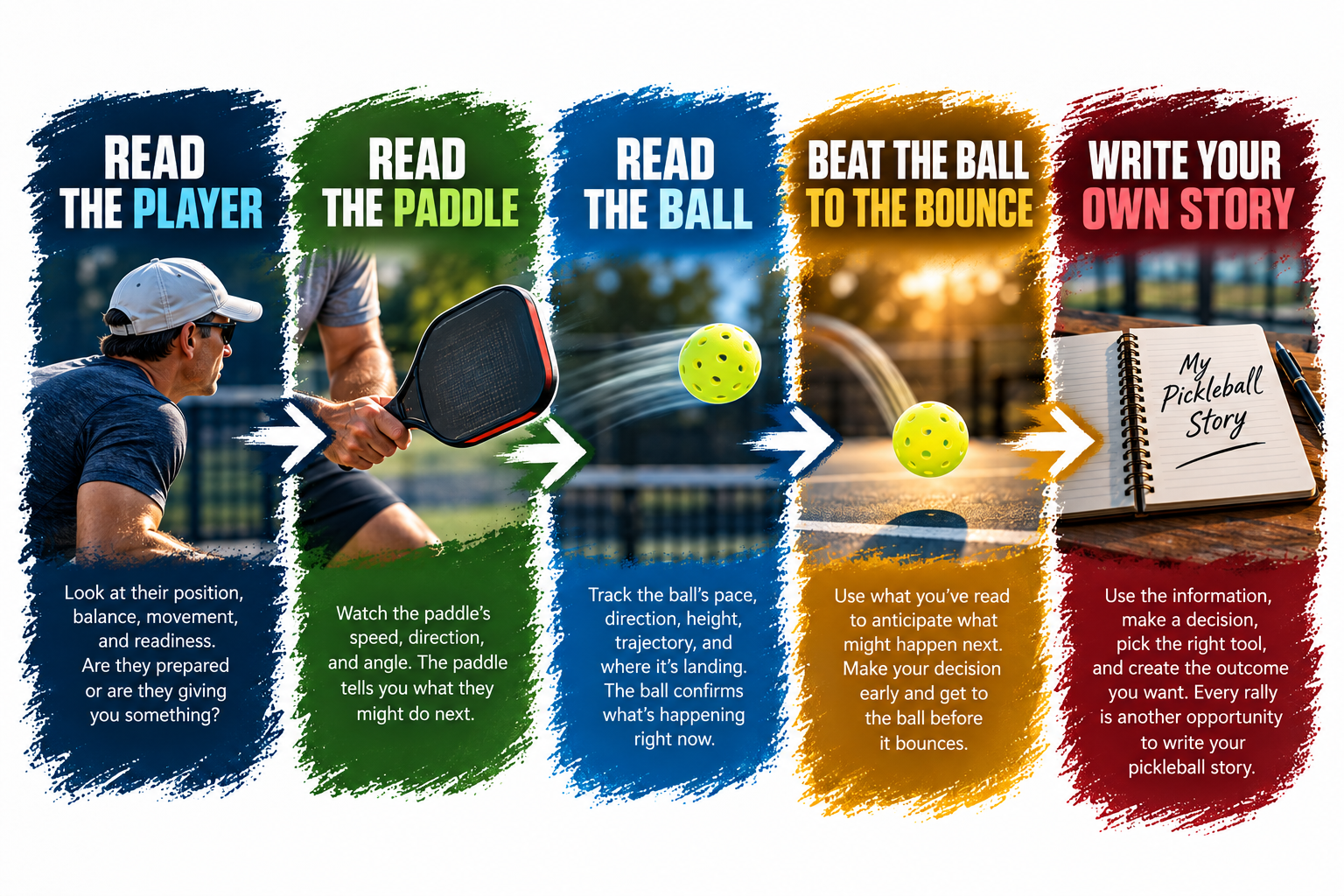
Read the Player
Before you read the ball, start by reading the player. Look across the net and notice where your opponents are positioned on the court. Look at their paddles. Are they in a ready position, or are they hanging down waiting for something to do? Look at their non-hitting arms. Are they active and helping the player stay balanced and prepared, or are they hanging at their sides like limp ropes?
Those few pieces of information can begin telling you whether you're facing an active or passive player, and that gives you a clue about what kind of game you may want to play. If your opponents are passive, you may be able to become more aggressive with your probes. But don't confuse passive with harmless. Passive players may also be impatient players who attack too quickly. If you're expecting that attack, what might have surprised you can instead become an opportunity to counterpunch. Always expect a return.
If your opponents are aggressive and constantly bringing pace, the story is different. You may find yourself playing against bangers. You don't have to fight their force with more force. That may be the time to play an Absorb and Redirect game. Let them provide the pace. Stay balanced. Stay aware. Absorb their force and decide what you want to do with it.
Reading the player helps you recognize what kind of game you're playing.
Read the Paddle
Now start looking at your opponent's paddle. Where is it starting from?
None of these clues guarantees what will happen. They're clues, and clues help you anticipate. The sooner you recognize what may be coming, the sooner you can begin preparing for it. This is how you begin seeing the shot before the ball has told you the entire story.
Read the Ball
Then the ball leaves the paddle, and now you have new information: route, trajectory, and speed. The ball begins confirming what you thought you saw before contact—but sometimes it doesn't.
Your opponent can make a last-millisecond body transition that changes everything you recognized before the ball was hit. That's okay. Reading the game doesn't mean making a prediction and stubbornly sticking with it. It means continually updating what you think is happening as new information becomes available.
The player gave you information. The paddle gave you more. Now the ball gives you the latest information. If the route, trajectory, or speed changes the story, you change with it.
Observe→Anticipate→Act→Observe AgainBeat the Ball to the Bounce
A player who isn't reading the game has to wait until the ball is already traveling toward them before figuring out what to do. Now they're reacting. Instead of beating the ball to the bounce, they're chasing it.
And chasing the ball means you're late. When you're late, your preparation becomes rushed, your movement becomes rushed, and your decisions become rushed. Then come the pop-ups, the short balls, the balls into the net, and the balls sailing out of the court. Points are being given away through unforced errors because you're continually reacting to what has already happened.
Don't chase the ball. Be there when it arrives.
Reading the game helps make that possible. When you recognize the information earlier, you can anticipate earlier. When you anticipate earlier, you can move earlier.
Chasing the Ball
Late recognition → Late movement → Rushed preparation → Reaction shot
Beating the Ball to the Bounce
Read → Anticipate → Arrive → Think → Act
When you beat the ball to the bounce, you have something the player chasing the ball doesn't have: time.
Write Your Own Pickleball Story
Reading the game is only part of the process. Eventually, you have to do something with the information. That's when you begin writing your own pickleball story by creating a battle plan and executing it.
Maybe you're going to probe your opponents and look for an opportunity to attack. Maybe you're facing aggressive players and you're going to absorb and redirect their pace. Whatever the battle plan is, understand that it is always in flux. Every success gives you information, and every failure gives you information.
If you find something that works, keep doing it. As the old saying goes, if it ain't broke, don't fix it. But if something fails once, don't immediately throw it away either. Try it again. If it works, you just learned something. If you try the same strategy three times and it continues to fail, the game is probably telling you something else. Listen to it.
Put that strategy away for a few rallies. Maybe leave it alone for ten minutes and then try it again. Your opponent may have forgotten about it, changed what they're doing, or become focused on defending something else you've shown them. If it works again, you have new information. If it fails again, you have new information, too. Be prepared to leave it.
Success and failure aren't simply outcomes. They're part of the story the game is continually telling you.
The Game Begins to Slow Down
Something changes when a player really begins learning how to read the game. They become calmer, more focused, and begin making better decisions based on the game that's actually being played in front of them.
If the situation calls for a probing and attacking game, they can play it. If the situation calls for an absorbing and redirecting game, they can play that too. Both become manageable.
And then something else begins to happen: the game starts to feel slower.
Of course, the ball isn't actually moving slower, and your opponent hasn't slowed down. You've changed. You're recognizing information earlier, anticipating sooner, and beating the ball to the bounce more often. Instead of constantly reacting to what just happened, you have time to consider what you want to happen next.
That's what learning to read the game can give you.
The game is continually telling you a story.
Learn what to look for.Learn how to read it.
Then use that information to write your own pickleball story.— IT GUY —